As artificial intelligence (AI) continues to dominate conversations across industries, it has become increasingly important for professionals and enthusiasts alike to understand the practical aspects of AI and its various applications. “Hands-On Machine Learning with Scikit-Learn” is an invaluable resource that takes readers on a journey through the world of AI, empowering them with the skills necessary to navigate this rapidly evolving landscape. With a comprehensive and accessible approach to machine learning, this book is perfect for beginners, experts, and everyone in between.
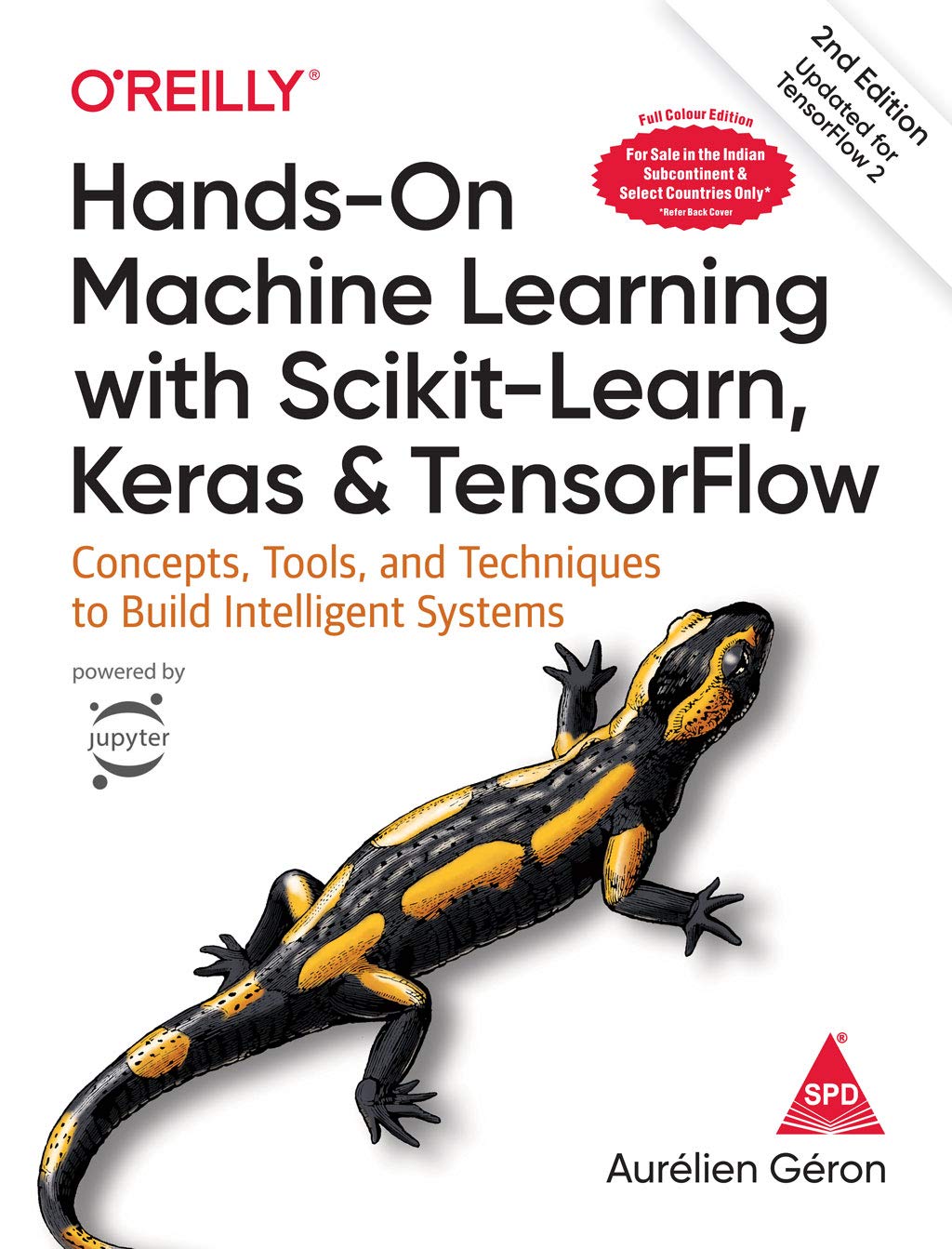
1. The Need for a Hands-On Approach
Machine learning, a subfield of AI, is at the heart of many cutting-edge applications. As such, gaining a strong foundation in machine learning techniques is crucial for anyone interested in staying competitive within the tech industry. “Hands-On Machine Learning with Scikit-Learn” acknowledges this need and delivers a step-by-step guide to mastering machine learning using the popular Python library Scikit-Learn.
2. A Comprehensive Introduction to Machine Learning
The book starts with an overview of machine learning, discussing its history, key concepts, and the different types of learning algorithms. From supervised learning to unsupervised learning, this section lays a solid foundation for understanding the core principles of machine learning and prepares readers for the hands-on exercises that follow.
3. Scikit-Learn: A Powerful Python Library
Scikit-Learn is a powerful, open-source Python library that provides simple and efficient tools for data mining and data analysis. The book introduces the library and its various features, giving readers an understanding of why Scikit-Learn is an industry-standard tool for machine learning. By leveraging the user-friendly nature of Python and the vast ecosystem of scientific libraries, Scikit-Learn makes it easier for readers to focus on the machine learning concepts and build robust models.
4. Data Preprocessing: The Key to Success
“Hands-On Machine Learning with Scikit-Learn” emphasizes the importance of data preprocessing, an often overlooked yet crucial aspect of machine learning. Data preprocessing is the process of cleaning, transforming, and organizing raw data to make it suitable for machine learning models. The book offers a comprehensive guide to various data preprocessing techniques, such as handling missing data, encoding categorical features, and feature scaling, ensuring that readers understand how to optimize their datasets for the best possible results.
5. Supervised Learning: Making Predictions
Supervised learning is one of the most common machine learning techniques, involving the use of labeled data to train models to make predictions. The book dives deep into supervised learning, exploring regression and classification problems, and covers a wide range of algorithms, including linear regression, logistic regression, support vector machines, and decision trees. Each algorithm is accompanied by a hands-on example, allowing readers to gain practical experience and build a strong foundation in supervised learning techniques.
6. Unsupervised Learning: Discovering Hidden Patterns
In contrast to supervised learning, unsupervised learning relies on unlabeled data to identify patterns, groupings, or relationships within the dataset. The book introduces readers to unsupervised learning techniques, such as clustering, dimensionality reduction, and anomaly detection, and covers popular algorithms like K-means clustering, hierarchical clustering, and PCA. As with supervised learning, each algorithm is presented with a hands-on example to illustrate the concepts and provide practical experience.
7. Model Evaluation and Hyperparameter Tuning
“Hands-On Machine Learning with Scikit-Learn” stresses the importance of evaluating the performance of machine learning models and selecting the best hyperparameters to fine-tune their performance. The book covers various evaluation metrics, such as accuracy, precision, recall, and F1 score, and offers guidance on how to use Scikit-Learn’s built-in tools for cross-validation and hyperparameter tuning. Through a series of hands-on examples, readers will learn how to optimize their models and gain a deeper understanding of the trade-offs involved in selecting the best algorithm and parameters for a given problem.
8. Deep Learning and Neural Networks
Deep learning, a subset of machine learning, has garnered significant attention in recent years due to its exceptional performance in tasks like image and speech recognition. “Hands-On Machine Learning with Scikit-Learn” delves into the world of deep learning, introducing neural networks and the backpropagation algorithm. The book covers essential deep learning concepts, such as activation functions, loss functions, and optimization techniques, while providing hands-on examples using popular deep learning libraries like TensorFlow and Keras.
9. Natural Language Processing
Natural language processing (NLP) is a rapidly growing subfield of AI that focuses on enabling machines to understand and generate human language. The book explores NLP techniques and applications, such as sentiment analysis, text summarization, and machine translation. By using Scikit-Learn’s built-in tools and other popular NLP libraries like NLTK and spaCy, readers will gain hands-on experience in processing and analyzing textual data.
10. Reinforcement Learning
Reinforcement learning is a type of machine learning where an agent learns to make decisions by interacting with its environment and receiving feedback in the form of rewards or penalties. “Hands-On Machine Learning with Scikit-Learn” provides an introduction to reinforcement learning, discussing key concepts like Markov decision processes, Q-learning, and policy gradients. The book also provides practical examples to help readers implement and understand reinforcement learning algorithms.
11. Putting It All Together: Real-World Applications
The book concludes with a series of real-world applications that demonstrate the power and versatility of machine learning. These case studies, which cover areas like fraud detection, recommendation systems, and computer vision, allow readers to see the practical implications of the techniques they have learned throughout the book. By working through these examples, readers will gain a deeper understanding of how machine learning can be applied across a range of industries and problem domains.
“Hands-On Machine Learning with Scikit-Learn” is an essential guide for anyone looking to gain a comprehensive understanding of machine learning and its practical applications. By using a hands-on approach, the book ensures that readers not only learn the theoretical concepts but also acquire the skills necessary to implement them. With its broad coverage of machine learning techniques and algorithms, this book is an invaluable resource for beginners, experts, and everyone in between.